

Skip to main content Skip to main navigation menu Skip to site footer
  • About
  • Editorial Board
  • Topics
    • Academic Engagement
    • Colloquium
    • Reviews
    • Correspondence
    • Original Research
    • Policy Roadmap
    • Vision & Opinion
    • Book Reviews
  • Category
    • Arts
    • Humanities
    • Medicine
    • Natural Sciences
    • World Religions
    • Social Sciences, Law & Economics
    • Technical & Environmental Sciences
    • Interdisciplinary
  • Editorial Policy
  • Current
  • Archives
  • Copyright
  • EASA
  • Search
  • News
  • Contacts
  • Register
  • Login
  1. Home /
  2. Academic Engagement

Academic Engagement

Productive academic work involves engagement with society and assessment of historical trends. EASA members are encouraged to submit papers in this category that includes Perspectives, Inaugural Articles, or Historical context (max 4000 words).

Perspectives may identify a critical science problem, provide a state-of-the-art assessment, and offer new insights or a new approach to its resolution. Perspectives may help contextualize findings within a field or add a new dimension to previously published research. Current advances and novel insights are encouraged.

Inaugural Articles may be submitted by newly elected EASA members as a way to introduce themselves to the readers of PEASA and may present new ideas or hypotheses or describe the historical development of the member’s field.

Historical context may come from members of our academy, who in many cases have participated in scientific developments of high historical value. Submissions in this category benefit from ‘witness testimonials’ describing important scientific developments and in relation to current understanding. Non-members, who wish to submit in this category, are encouraged to contact the Editor-in-Chief.

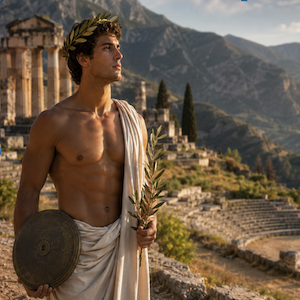
  • The Delphic idea and the Olympic spirit as foundations of ancient hellenic harmony

    Ioannis Liritzis
    2026-05-18
    334
    PDF: 160
    HTML: 65
    DOI: https://doi.org/10.4081/peasa.81
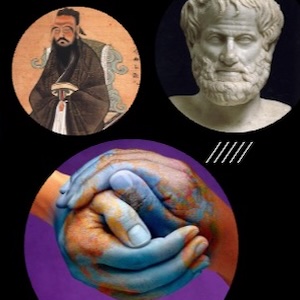
  • Global ethics: self-critique and dialectics on unchangeable morality principles

    Ioannis Liritzis
    2025-10-22
    695
    PDF: 387
    HTML: 87
    DOI: https://doi.org/10.4081/peasa.63
  • Pathways to understanding nanotechnology for elementary students: Implications for teaching with web-supported problem-based learning

    David Devraj Kumar, Sabrina F. Sembiante
    2025-05-26
    1885
    PDF: 691
    HTML: 153
    DOI: https://doi.org/10.4081/peasa.55
  • Epistemological and ontological dualities as a challenge for a holistic modernity

    Hermes Andreas Kick
    2025-02-18
    1700
    PDF: 711
    HTML: 225
    DOI: https://doi.org/10.4081/peasa.53
  • How can the science of complexity help young people realize their talents and choose their future?

    Anastasios Bountis
    2025-01-21
    1997
    PDF: 812
    HTML: 244
    DOI: https://doi.org/10.4081/peasa.50
  • Wild Heldreichii orchids. Paros Island, 2023. Image courtesy: I. Melanitis.

    Art, AI, strategies of biomimicry: mimiphenia, the ambivalent mimicry

    Ioannis Melanitis
    2025-01-16
    3669
    PDF: 1065
    HTML: 272
    DOI: https://doi.org/10.4081/peasa.47
  • The Divine Comedy (Hell) through Aristotelian ethics and Thomistic ontology

    Boštjan Marko Turk
    2024-09-24
    5361
    PDF: 1138
    HTML: 17
    DOI: https://doi.org/10.4081/peasa.35
  • Cracking the code of Earth's magnetic mysteries: ancient secrets unveiled by byzantine bricks reconfirmed by Mesopotamian ceramics

    Ioannis Liritzis
    2024-01-09
    2890
    PDF: 1044
    HTML: 57
    DOI: https://doi.org/10.4081/peasa.24
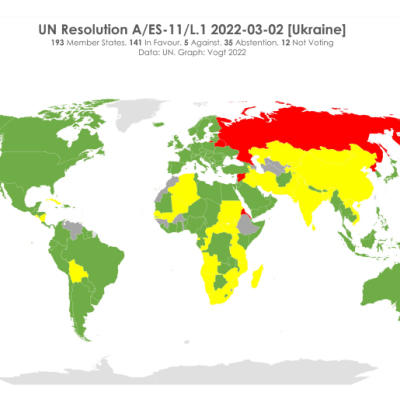
  • The dangerous construction of national, religious and moral identities in the Ukrainian War

    Markus Vogt
    2022-10-13
    1078
    PDF: 212
    DOI: https://doi.org/10.4081/peasa.15
  • Perspectives to fight viruses. The example of Sars-CoV-2

    Costas Demetzos, Panagiotis Vlamos, Dimitrios Vlachakis
    2022-10-07
    633
    PDF: 307
    DOI: https://doi.org/10.4081/peasa.16
1-10 of 11 Next
Make a Submission

authors

FOR AUTHORS
  • Guide for Authors
  • Benefits for Authors
  • How to write a scientific paper
  • How to write a Review article
  • Article Processing Charge

reviewers

FOR REVIEWERS
  • Benefits for Reviewers
  • How to review

indexing

INDEXING
  • Google Scholar
  • DOAJ
  • Analytics

Keywords

Proceedings of the European Academy of Sciences and Arts

St.-Peter-Bezirk 10, A-5020 Salzburg, Austria
Tel.: +43 (0)662 84 13 45 - Fax: +43 (0)662 84 13 43
office@euro-acad.eu | presidential.office@euro-acad.eu

PEASA is an Open Access, peer-reviewed journal published by PAGEPress®, Pavia, Italy.

eISSN: 2791-5301

Info

  • About
  • Editorial Board

Info Submission

  • Submission
  • Guidelines For Authors

Our App Is Free For Anyone!

PEASA was developed by Ioannis Liritzis (founder-coordinator), Andrew Balas, Beatrix Hiesmayr, Marc Huett, David Kumar, Antonio Marquina, Peter Herrmann, all EASA members.

PEASA logo denotes scientific content in conjunction with human values: the seven stars symbolize the seven article categories covered by the journal, and the three seamless spears flower the devotion to Strength, Beauty, and Wisdom.


www.euro-acad.eu

European Academy of Sciences and Arts | St. Peter-Bezirk 10 | A-5020 Salzburg | +43 662 84 13 45 | office@euro-acad.eu

© PAGEPress 2008-2026    •    PAGEPress® is a registered trademark property of PAGEPress srl, Italy    •    VAT: IT02125780185
This journal is published by PAGEPress® srl (Pavia, Italy), which is the data controller for all personal data processed through this platform. For full details on how your data is collected, used and protected, please read our Privacy Policy.